

Discover More Latest Blogs




.svg)
.svg)
.svg)

In the U.S., there’s a lot of pressure to pick sides.
It’s often one or the other. Right or wrong. For or against. Justice or mercy.
Over the past decade, my own thinking has evolved. I’ve always leaned heavily toward justice—accountability, fairness, responsibility. It’s how I operate at work, in coaching, and in life. I want to be fair. I want to do what’s right. I want people to be held accountable for their actions.
But recently, while preparing for an all-hands talk at work, I found myself reflecting on a different value: mercy.
I started asking—can justice and mercy exist together? Can they actually redefine each other?
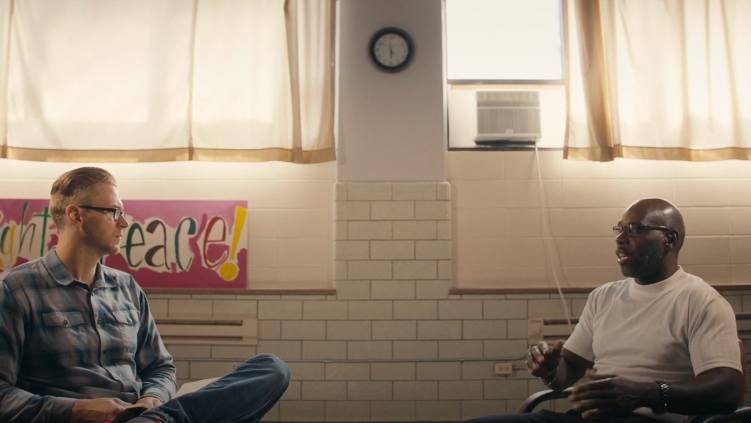
One of the most powerful examples I’ve seen of this is on the South Side of Chicago, at Precious Blood Ministry of Reconciliation. Their work was featured in our docuseries, Beyond Greater, which tells the stories of people and places creating hope in ways the world doesn’t expect. You can watch it at gtzp.org/beyond-greater.
Precious Blood practices restorative justice. It’s not about ignoring what happened. It’s about acknowledging harm, sitting in a circle, listening, crying, and letting everyone involved be seen. Victims. Offenders. Families. Community members.
They don’t aim to erase consequences—but they believe in restoration over retribution. They hold people accountable while creating space for healing. And that hit me.
I used to think it had to be one or the other. But maybe it doesn’t.
Maybe the most powerful transformation happens in the middle—in that messy space between justice and mercy, where people are still responsible for their actions, but they’re also given the dignity and opportunity to grow from them.
It challenged me to ask:
Because I think the world needs both. And I think people—especially the ones who’ve been hurt or have caused hurt—deserve both.
If you’re a leader, teammate, parent, or coach, I’d encourage you to sit with that tension for a moment. You may be holding someone to a high standard—which is good. But is there also room to lead with empathy?
Business doesn’t need to be softer. But maybe it does need to be more human.
If that resonates with you, I’d love to hear how you wrestle with this balance in your work or life. Let’s share stories, not just solutions.
Share:

.svg)

.svg)

.svg)
Available on




.svg)
.svg)
.svg)
.svg)


© Copyright 2022 Greater Than Zero Percent
Greater Than Zero Percent is a registered 501(c)(3) EIN: 86-1309421