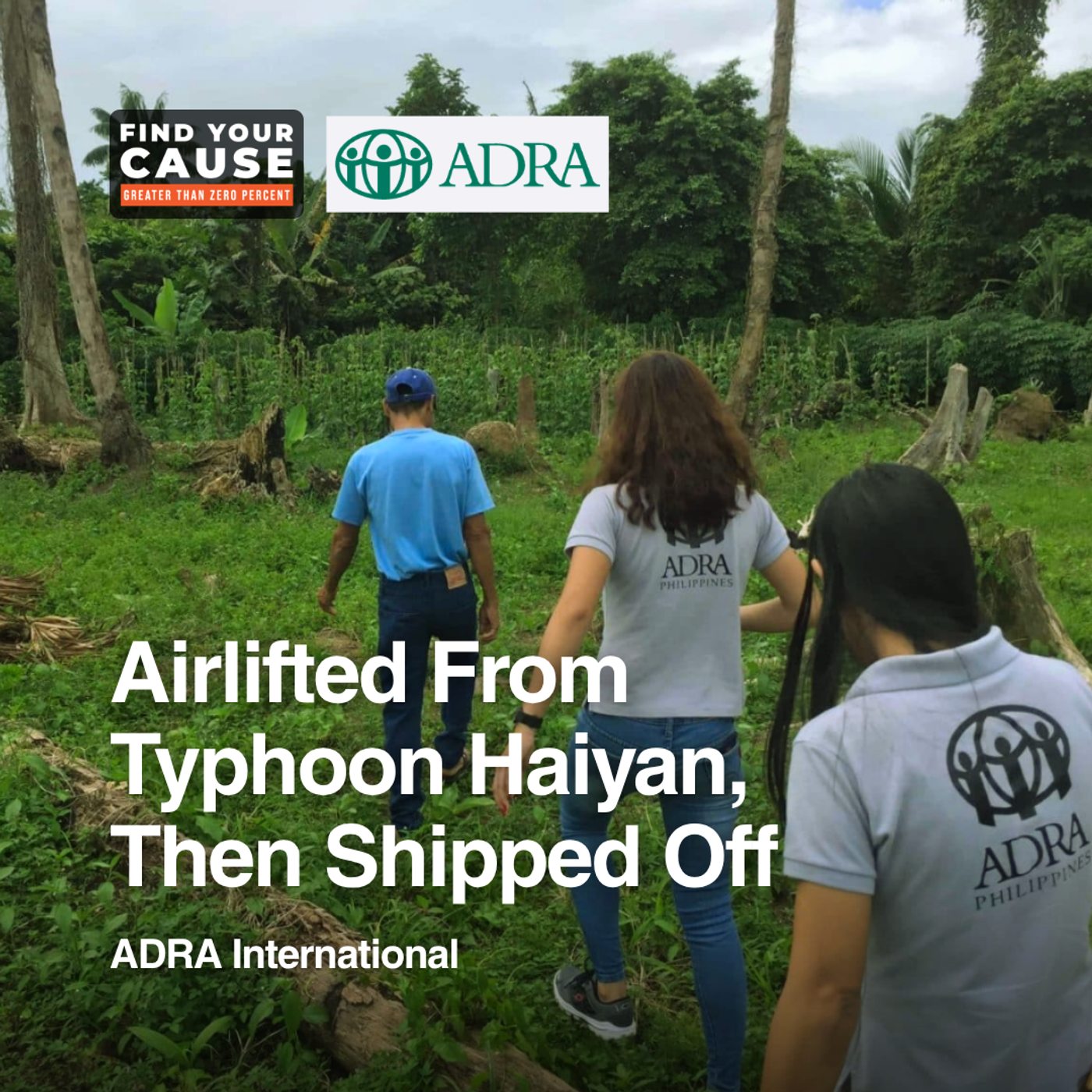
Weanne Estrada is the Mental Health Specialist at ADRA International, the global humanitarian arm of the Seventh-day Adventist Church.
ADRA serves in about 120 countries across roughly 1,000 projects in health, nutrition and water, education, livelihoods, and disasters and emergencies, with a mission to serve humanity so all may live as God intended.
Weanne grew up in the Philippines, where recurring typhoons made disaster relief a regular part of life. After college she volunteered in the government response to Typhoon Haiyan, providing psychological first aid to survivors airlifted to Manila, and left that work asking what happens to people once their loss fully sets in. That question led her into humanitarian mental health.
Today she builds mental health support into ADRA's other programs, including psychological first aid for distribution volunteers, child-friendly spaces, and World Health Organization training for non-specialist health providers in places like Sudan, Yemen, and Myanmar.
Timestamps:
[00:26] Who is Weanne Estrada, and what is ADRA's mission?
[01:21] Why did Weanne choose mental health?
[02:09] What did Typhoon Haiyan show her about the gap after a disaster?
[03:22] Is mental health its own program at ADRA?
[05:22] What is psychological first aid?
[06:45] What do people miss about the psychological impact of disasters?
[08:16] Why is a disaster where "no one died" still full of grief?
[09:06] How do you help children heal after trauma?
[10:47] How does mental health care change for adults?
[11:31] What do you do when there is no psychiatrist nearby?
[13:10] How does faith shape the way ADRA serves?
[14:41] What would be lost if ADRA's mental health work disappeared?
[15:21] What happens to children and trafficking survivors who never get treatment?
[16:27] How can trauma affect memory enough to get someone denied resettlement?
[17:34] How do you measure the impact of mental health work?
[18:33] Why does Weanne have beef with Maslow?
[19:59] What small signs show that hope is returning?
[20:53] Is media a help or a harm for the people ADRA serves?
[23:55] What would a perfect mental health response to a disaster look like?
[25:11] Why does ADRA adopt existing health facilities instead of building its own?
[25:42] What is task shifting, and how did it work in Myanmar?
[26:56] Can AI help close the mental health gap?
[30:19] What does Weanne hope to see from ADRA in 10 years?
[31:23] How can listeners get involved with ADRA?
[32:06] What makes ADRA Connections different from other short-term trips?
[33:43] Can someone get psychological first aid training on the way to a disaster?
[34:54] What does Weanne want listeners to take away?
Guest Links:
GTZP Links:





.svg)
.svg)
.svg)
.svg)
.svg)
.svg)
.svg)